
The state rule
Chapter 2 of the Biodiversity and Conservation SEPP says no permit is needed for:
- vegetation “that the council is satisfied is a risk to human life or property”, and
- vegetation the council is satisfied “is dying or dead, and is not required as the habitat of native animals”.
The key words are “the council is satisfied”. Not you, not the tree contractor. That’s why councils have processes for proving it.
How councils handle it
It varies more than any other part of the rules. A few examples from councils’ own pages:
| Council | Dead or dangerous tree |
|---|---|
| Sutherland Shire | Imminent risk: remove without a permit, but an insured arborist (council recommends AQF 4+) must inspect and photograph it, and you complete council’s SEPP Exempt Imminent Risk form and keep it for two years. Dead trees are generally exempt unless they have hollows. |
| Georges River | Imminently dangerous: removal allowed after an AQF 5 arborist’s assessment, with council’s Exempt Tree Works Form lodged within 72 hours. Removing a whole dead tree needs a permit. |
| Camden | Dead or dangerous trees need council’s Tree Exemption Form. |
| Campbelltown | Council must declare the tree dead, dying or dangerous first (a fee applies). |
| Ryde | An AQF 5 risk assessment and council’s written OK first. |
| Liverpool | Dead trees and trees about to fail are exempt, but photograph them first; council recommends independent arborist advice. |
Your council’s page has the exact process.
If it’s failing right now
- Get people clear. Nothing is worth an injury.
- Power lines involved? Stay at least 8 m away and call Ausgrid (13 13 88) or Endeavour Energy (131 003).
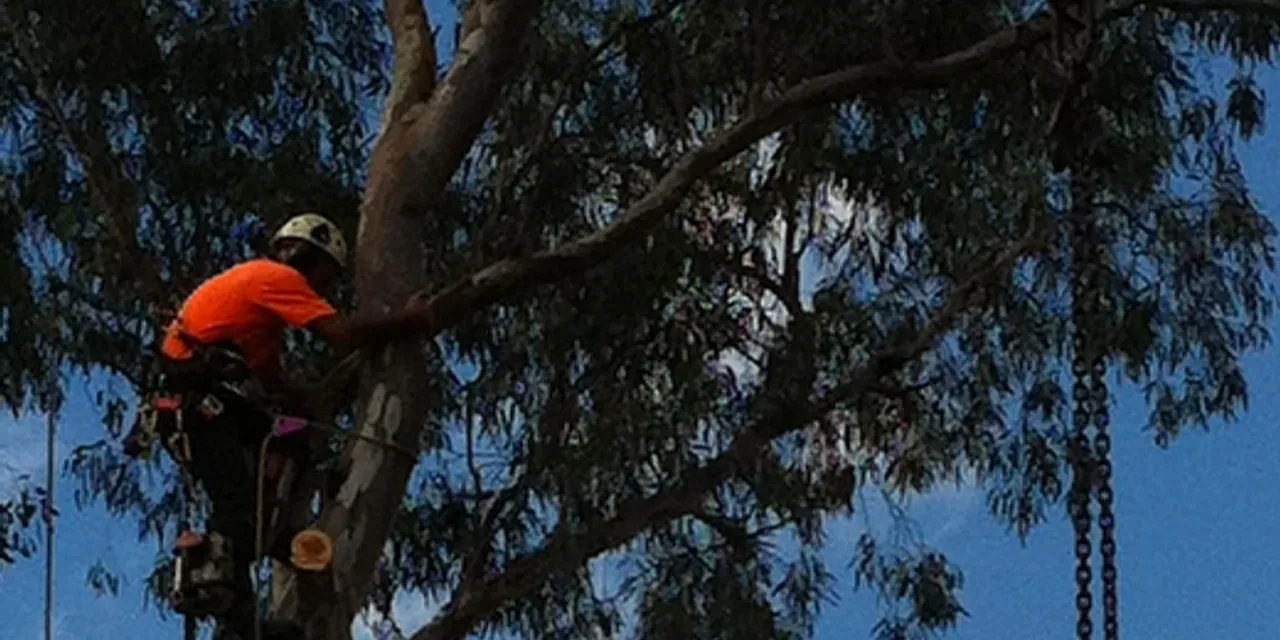
- Call a qualified arborist to make it safe. That may mean removing only the dangerous part.
- Photograph everything before, during and after: the defect close up, and the tree in context.
- Keep the arborist’s written assessment, and lodge any form your council requires within its deadline.
Dead isn’t always dead
Eucalypts and angophoras can drop most of their leaves in drought and re-shoot from the trunk and branches afterwards (epicormic growth). A tree that looks dead in February may be green by spring. Scratch a twig: green under the bark means it’s alive. And dead trees with hollows can be home to possums, gliders, owls and parrots, which is why councils protect them. If there’s wildlife, call WIRES before any work.
Changes coming
The NSW Government has proposed tightening these exemptions: limiting the risk exemption to imminent risk, and either requiring an arborist’s certificate before removing a dead or dying tree or removing that exemption altogether, because some people poison a tree and then claim it’s dead. As at 30 September 2026 the rules hadn’t changed. We’ll update this guide when they do.